Believe it or not, low levels of essential vitamins and minerals can have an impact on chronic pain. There is little evidence to prove that low levels directly cause pain – ex: you hurt only because your vitamin X levels are low. But there have been many studies performed where low levels of vitamins had a much higher likelihood with those who have chronic pain. There are many vitamins of reference, but the one I will focus on only one today. Probably the easiest and most easily recognized of all the vitamins – good old Vitamin D. There are actually 3 ways you can get this vitamin into your system – #1 sunlight or #2 diet or #3 supplementation. What are the daily recommendations?

Sunlight?
Sunlight exposure causes reactions in your skin, which in turn up the amount of vitamin D in your system. Lets start with Sunlight. “10 to 15 minutes of sun on the arms and legs a few times a week can generate nearly all the vitamin D we need” (1). But this largely depends on what latitude you live (how close the sun is to you – closer to the equator, the hotter the sun, the less exposre you need especially to avoid skin cancer). Also, your skin produces less Vitamin D as you age – “people ages 65 and over generate only one-fourth as much as people in their 20s do” (1). And if you have darker skin, you produce about half as much vitamin D in your blood as someone with lighter skin. And there has been a lot of research lately that is not exactly conclusive in regards to sunscreen interfering with Vitamin D absorption, but for the most part it may not interfere at all. And when you weigh the risks with skin cancer – its probably best to just go ahead and wear your SPF.

Diet?
The recommendation “for adults 19 years and older is 600 IU (15 mcg) daily for men and women, and for adults >70 years it is 800 IU (20 mcg) daily” (2). What are good sources for Vitamin D in your diet you ask? Fish (specifically salmon, swordfish, tuna), orange juice with vitamin D, dairy and plant milks fortified with vitamin D, egg yolk, and fortified cereals (2).
And don’t forget how important vitamin D is for calcium absorption – I am talking to all those reading with osteopenia and osteoporosis!!! “Without vitamin D, only 10 to 15% of dietary calcium and about 60% of phosphorus is absorbed,” (3).
Supplementation?
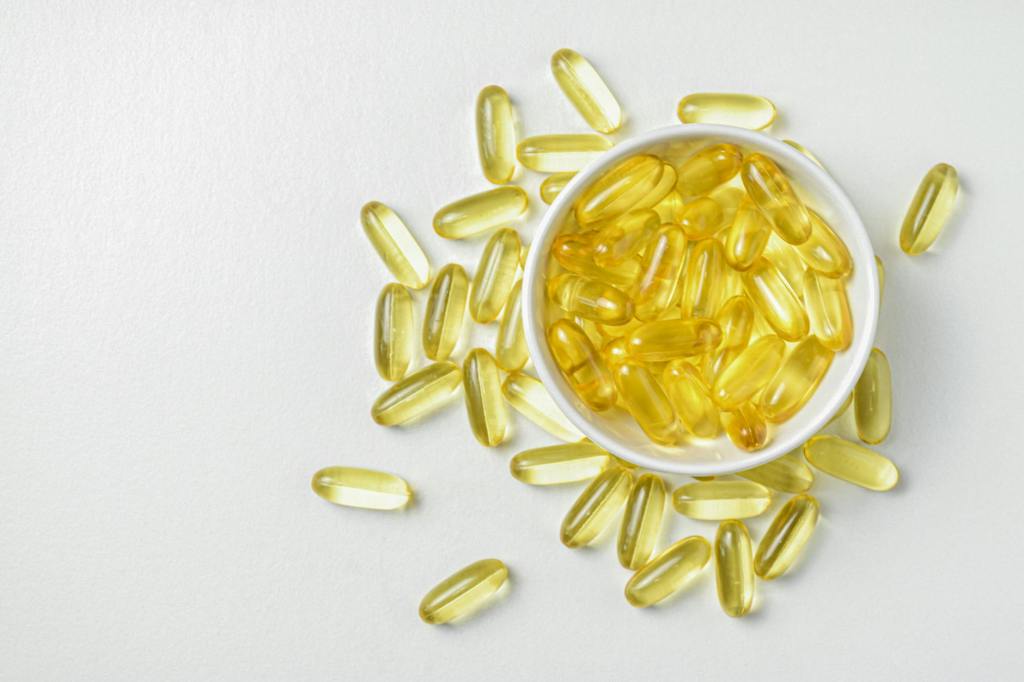
The recommendation is no more than 2,000-4,000 IU of Vitamin D per day (4). And if you purchase supplements, you will notice there is both Vitamin D2 and Vitamin D3. “Vitamin D2 is made from plants and is found in fortified foods and some supplements. Vitamin D3 is naturally produced in the human body and is found in animal foods (2). Some studies suggest D3 is better since it is found in the body and may absorb easier into the system, but in the end it may not matter.
That is great and all, but you didn’t really say why I need to take it.
In children, the most common sign of deficiency is rickets. This literally means the softening of bones and malformation as they develop. In adults, it can cause osteomalacia, with symptoms “similar to those of rickets and include bone deformities and pain, hypocalcemic seizures, tetanic spasms, and dental abnormalities” (5).
But there is also a correlation between Vitamin D and chronic pain. There was as study done by the Mayo clinic where they found “that patients who required narcotic pain medication, and who also had inadequate levels of vitamin D, were taking much higher doses of pain medication — nearly twice as much — as those who had adequate levels” (6).
But do they know why? No. “While associations between insufficient and deficient levels of vitamin D and poorer health outcomes have been established, the relationship between vitamin D and chronic pain is less well understood” (7). As usual, more research is needed.

Bottom line
Vitamin D is good for you. Eat a well balanced diet, get outside everyday for a reasonable amount of time, and take a supplement if you find yourself behaving like a vampire. Especially in those colder months (think snow) and those in those very hot climates (think tropics). Hope this helps!!
Heal today, transform tomorrow. Unlock your potential to heal, learn and grow. – Dr. Barb Wally, LLC
References:
- Time for more vitamin D. Harvard Health. (2008, September 1). https://www.health.harvard.edu/staying-healthy/time-for-more-vitamin-d
- Vitamin D. (n.d.). The Nutrition Source. https://www.hsph.harvard.edu/nutritionsource/vitamin-d/#:~:text=Recommended%20Amounts&text=RDA%3A%20The%20Recommended%20Dietary%20Allowance,cause%20harmful%20effects%20on%20health.
- Holick MF. Vitamin D deficiency. N Engl J Med 2007;357:266-81.
- Institute of Medicine. Dietary Reference Intakes for Calcium and Vitamin D. Washington, D.C.: National Academies Press, 2010. https://www.ncbi.nlm.nih.gov/books/NBK56070/
- Office of Dietary Supplements – Vitamin D. (n.d.). https://ods.od.nih.gov/factsheets/VitaminD-HealthProfessional/#en13
- Mayo Clinic study suggests those who have chronic pain may need to assess vitamin D status. (n.d.). Mayo Clinic. https://medprofvideos.mayoclinic.org/videos/mayo-clinic-study-suggests-those-who-have-chronic-pain-may-need-to-assess-vitamin-d-status#:~:text=Mayo%20Clinic%20research%20shows%20a,ways%20to%20treat%20chronic%20pain.
- Martin KR, Reid DM. Is there role for vitamin D in the treatment of chronic pain? Ther Adv Musculoskelet Dis. 2017 Jun;9(6):131-135. doi: 10.1177/1759720X17708124. Epub 2017 May 9. PMID: 28620421; PMCID: PMC5466150.
Note: These blog articles are not in exchange for a one on one Physical Therapy visit. Please contact me if you are interested in receiving a Physical Therapy visit!
*This content is original and copyright Dr Barb Wally, LLC*
 Telehealth Physical Therapy